1 Existing Conditions
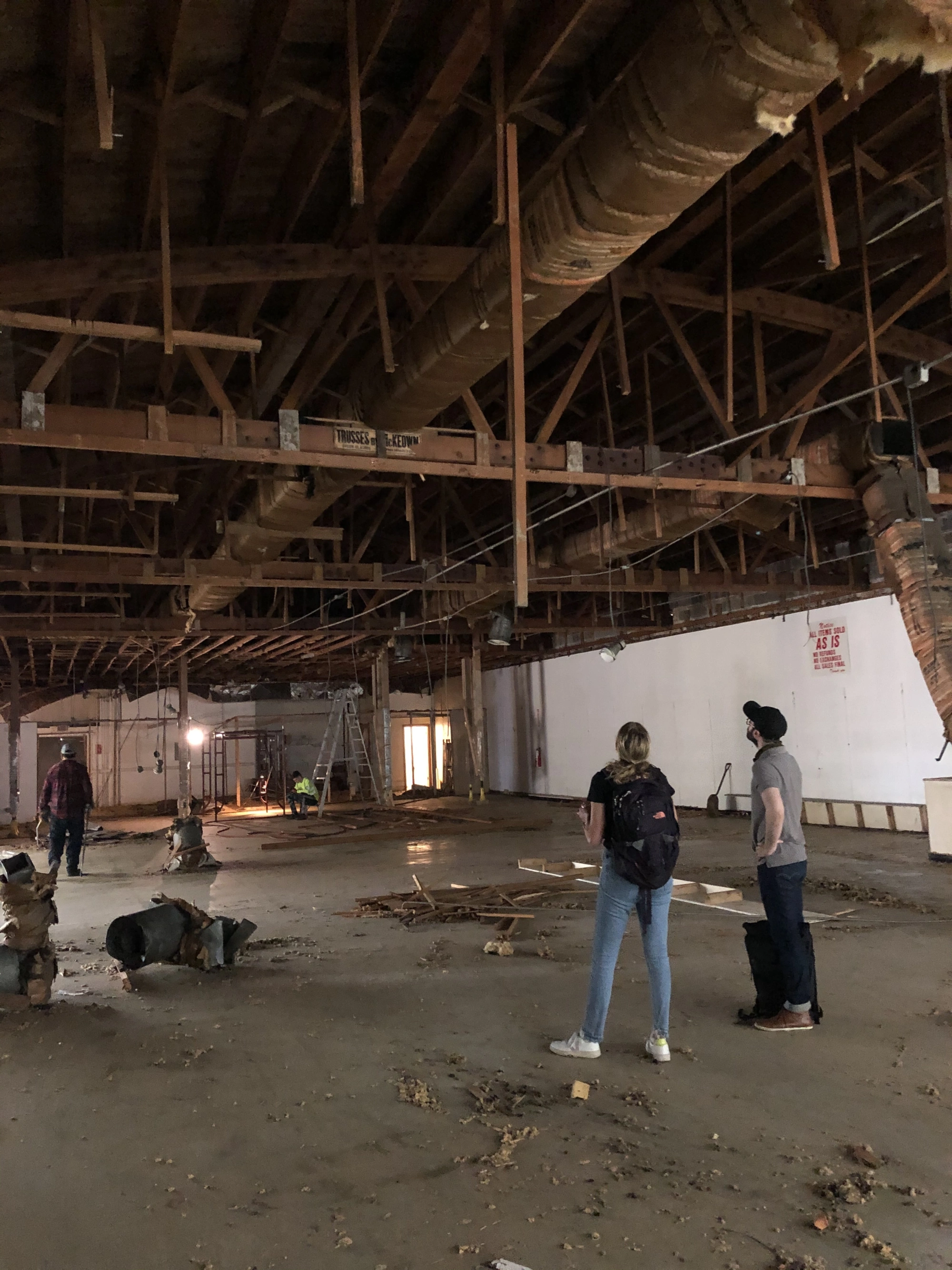
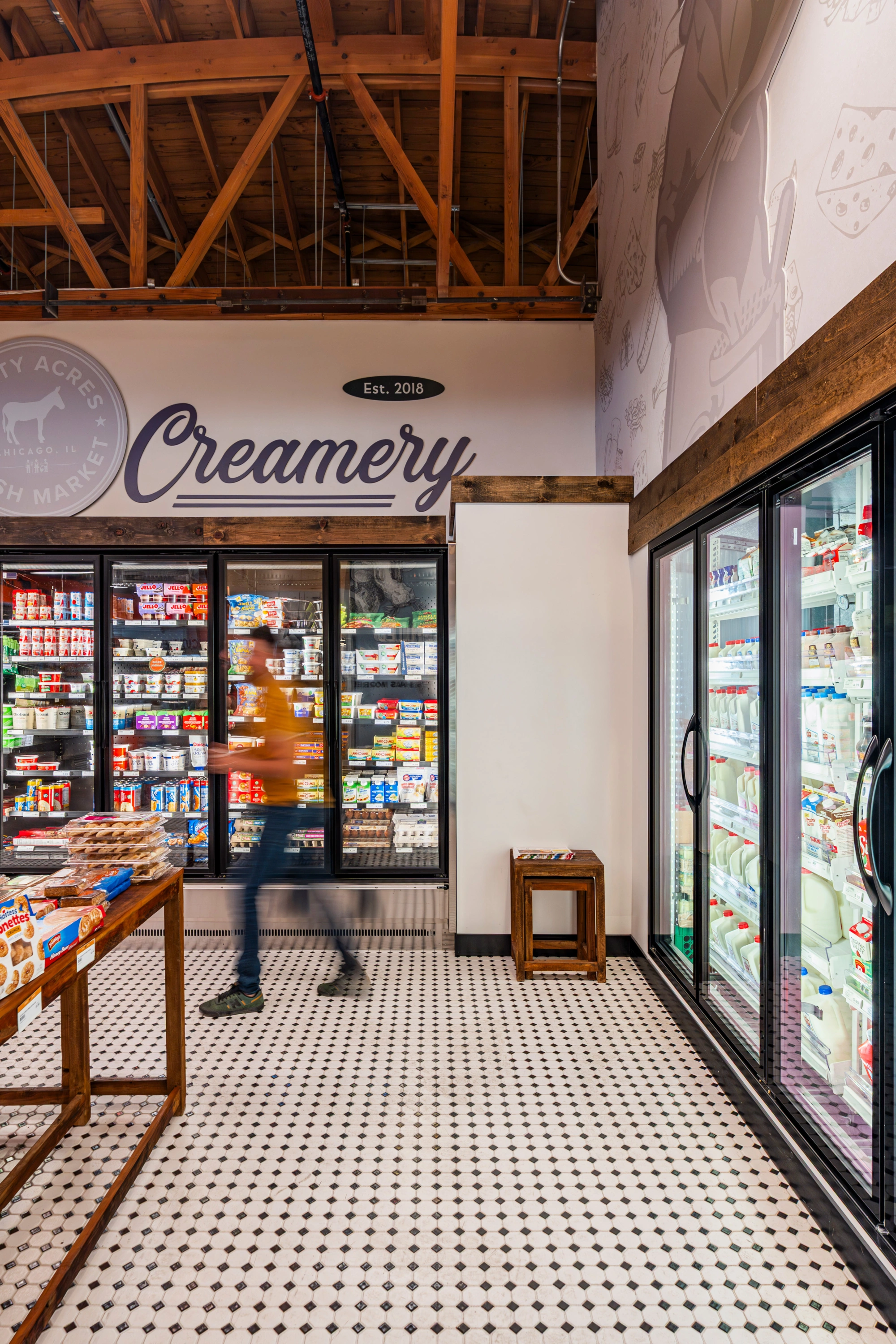
Former Salvation Army tied a new addition to a bowstring truss structure.

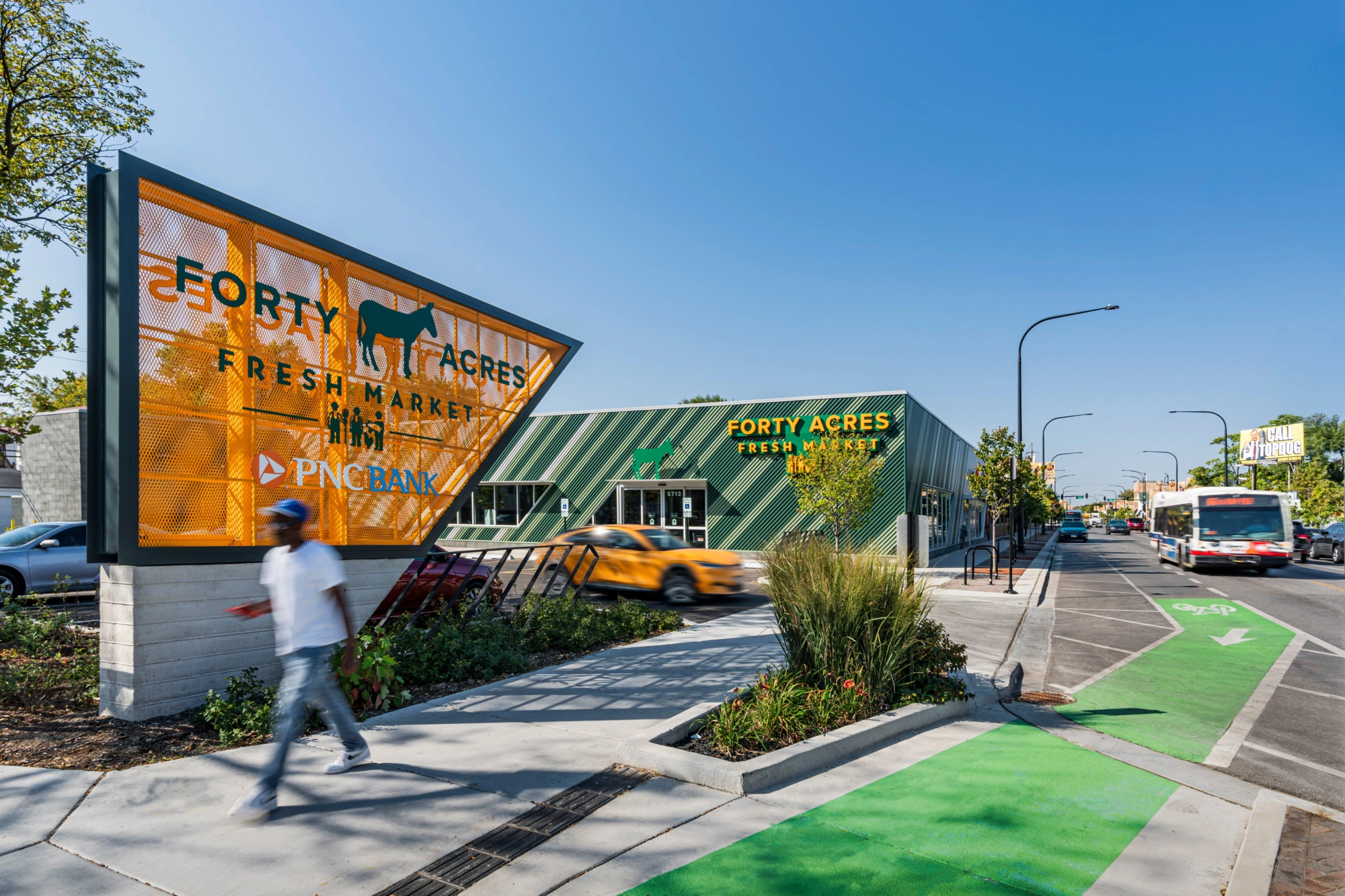
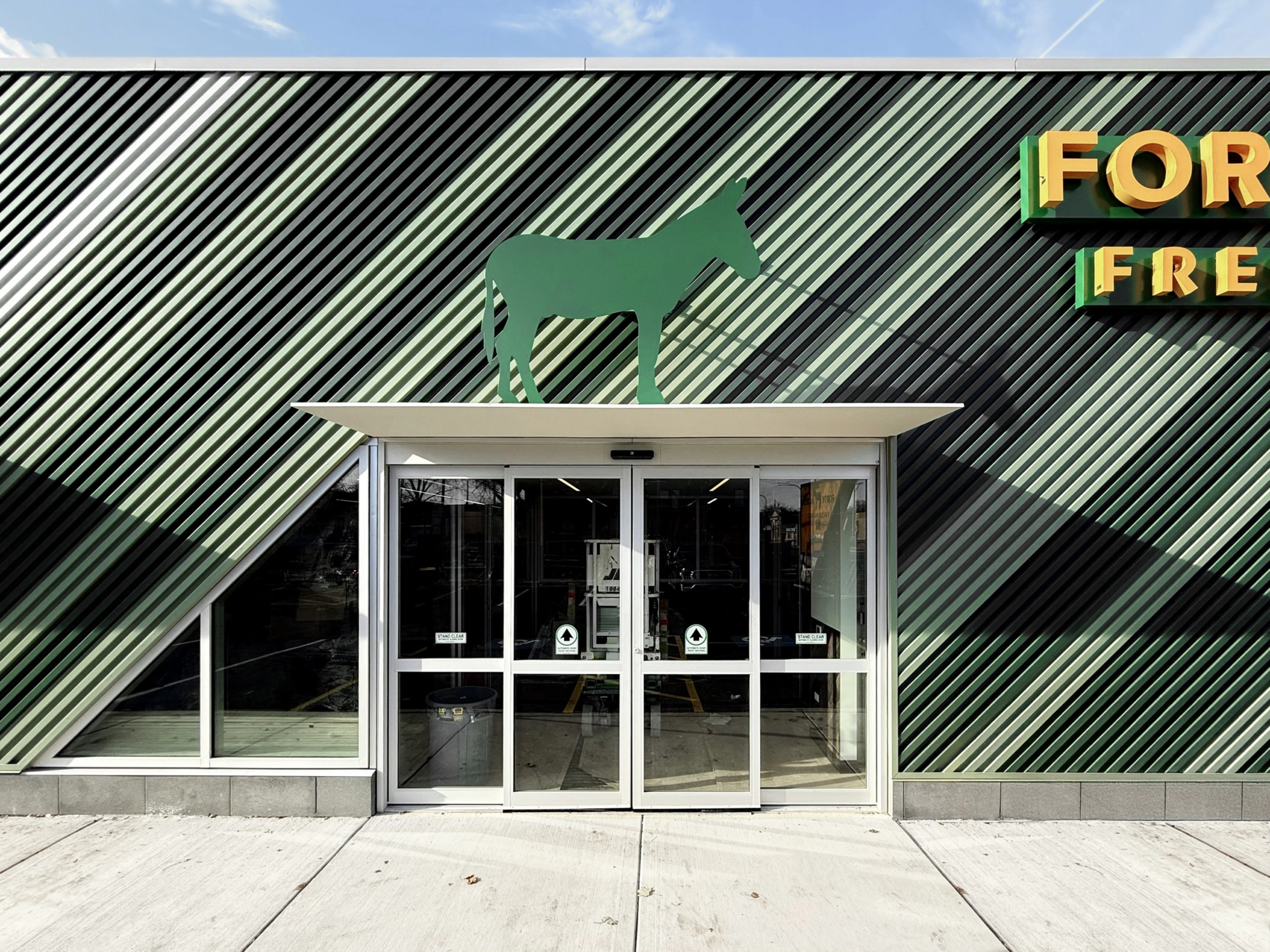
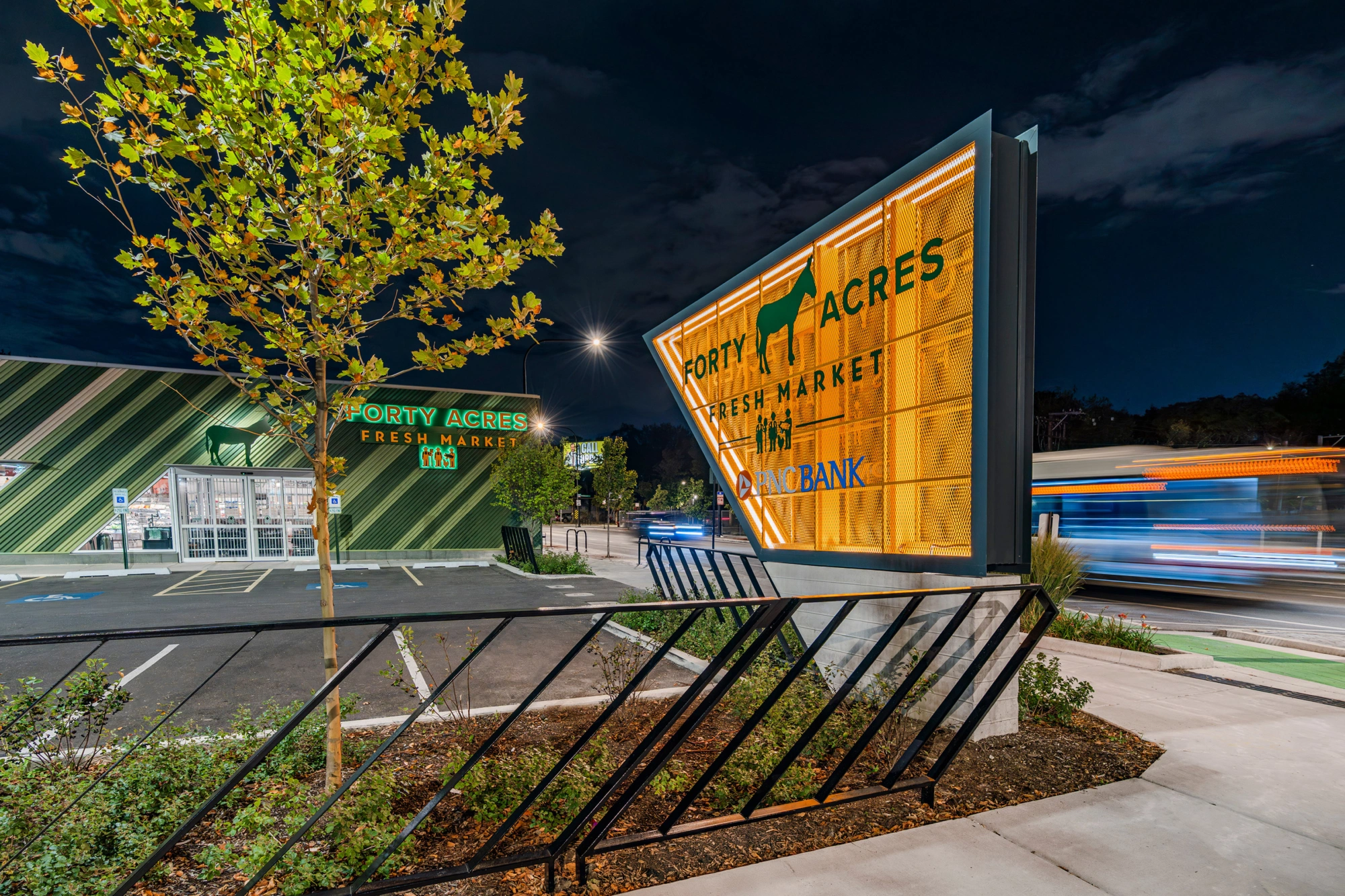
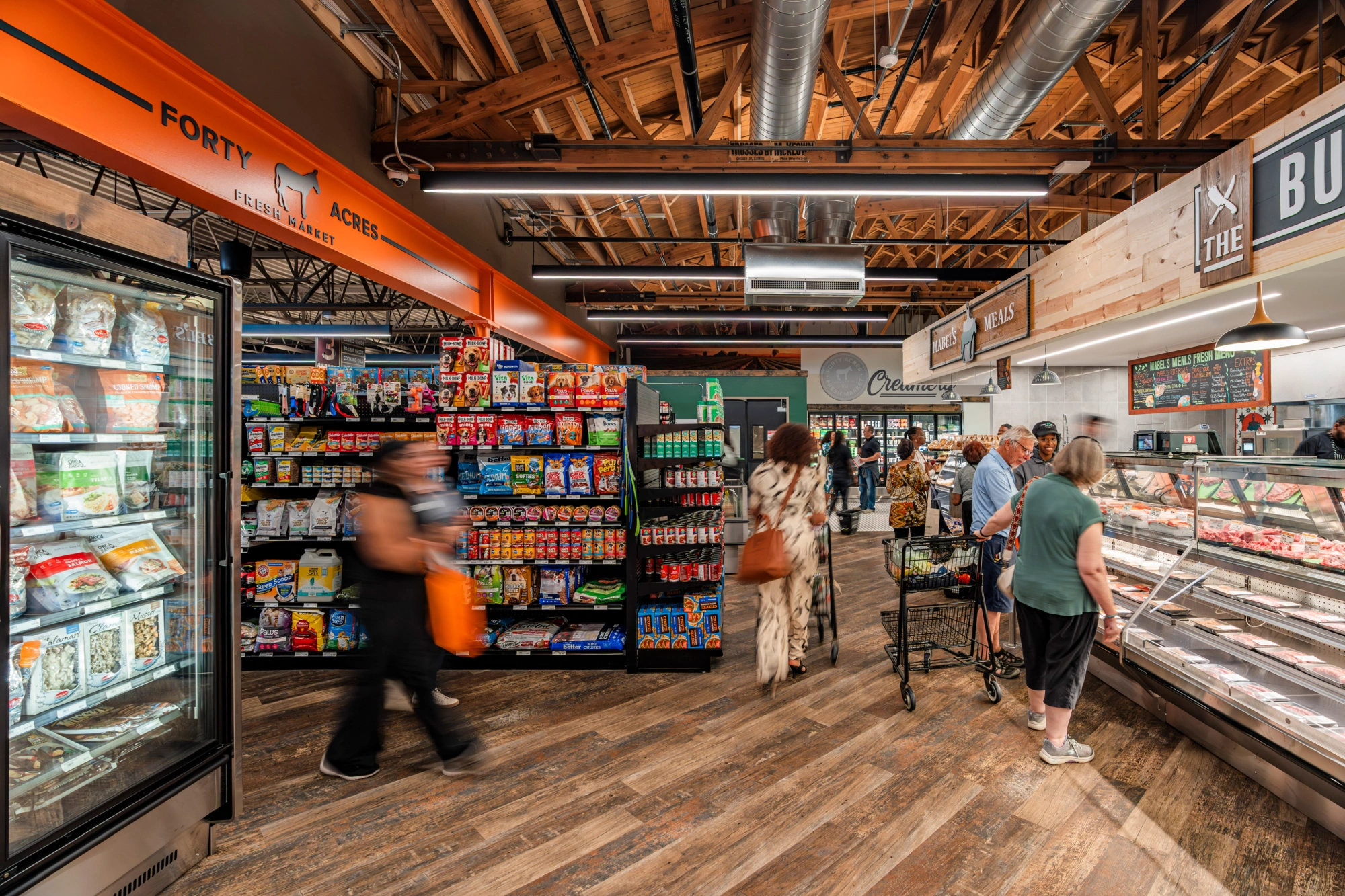
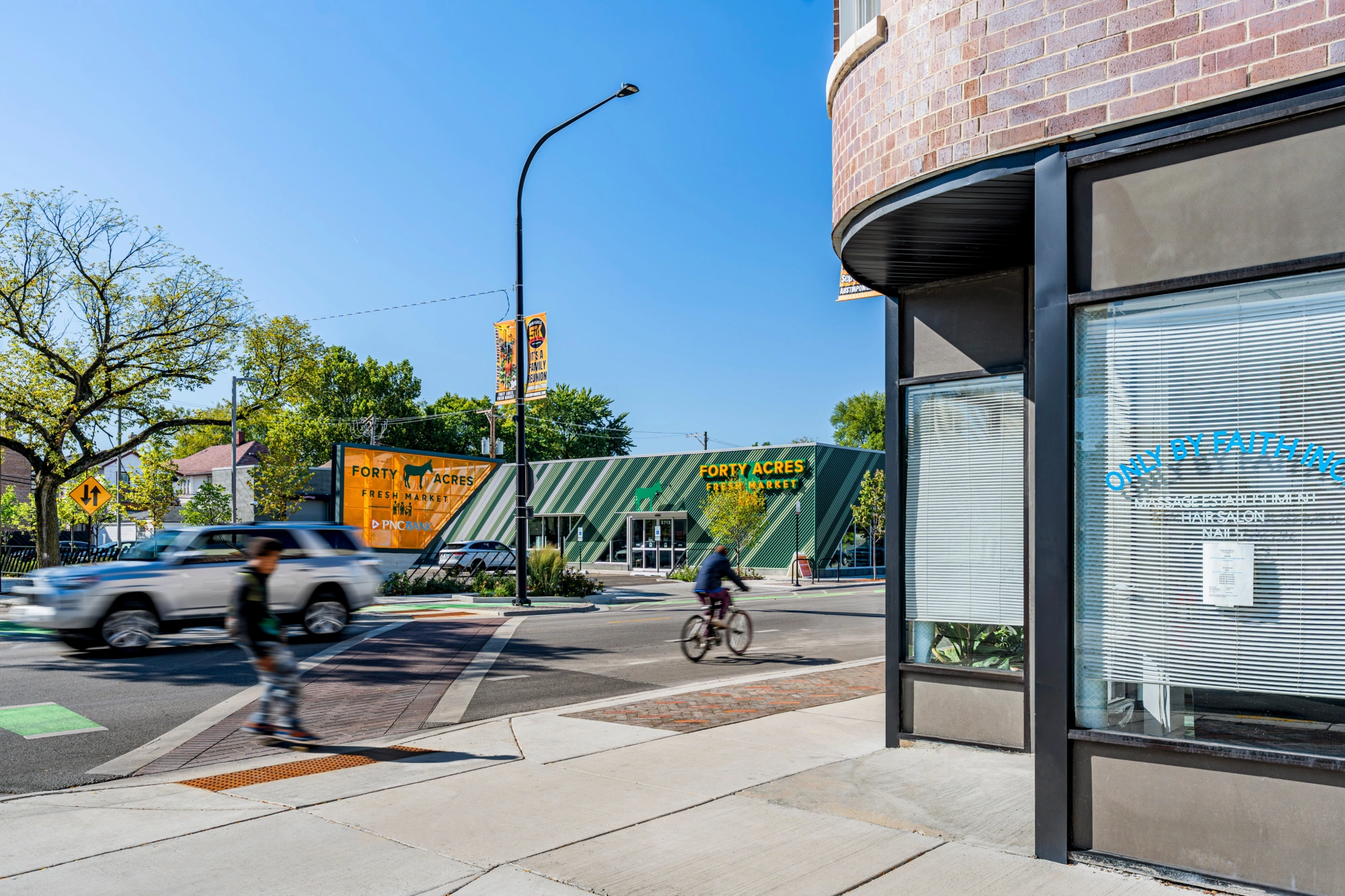
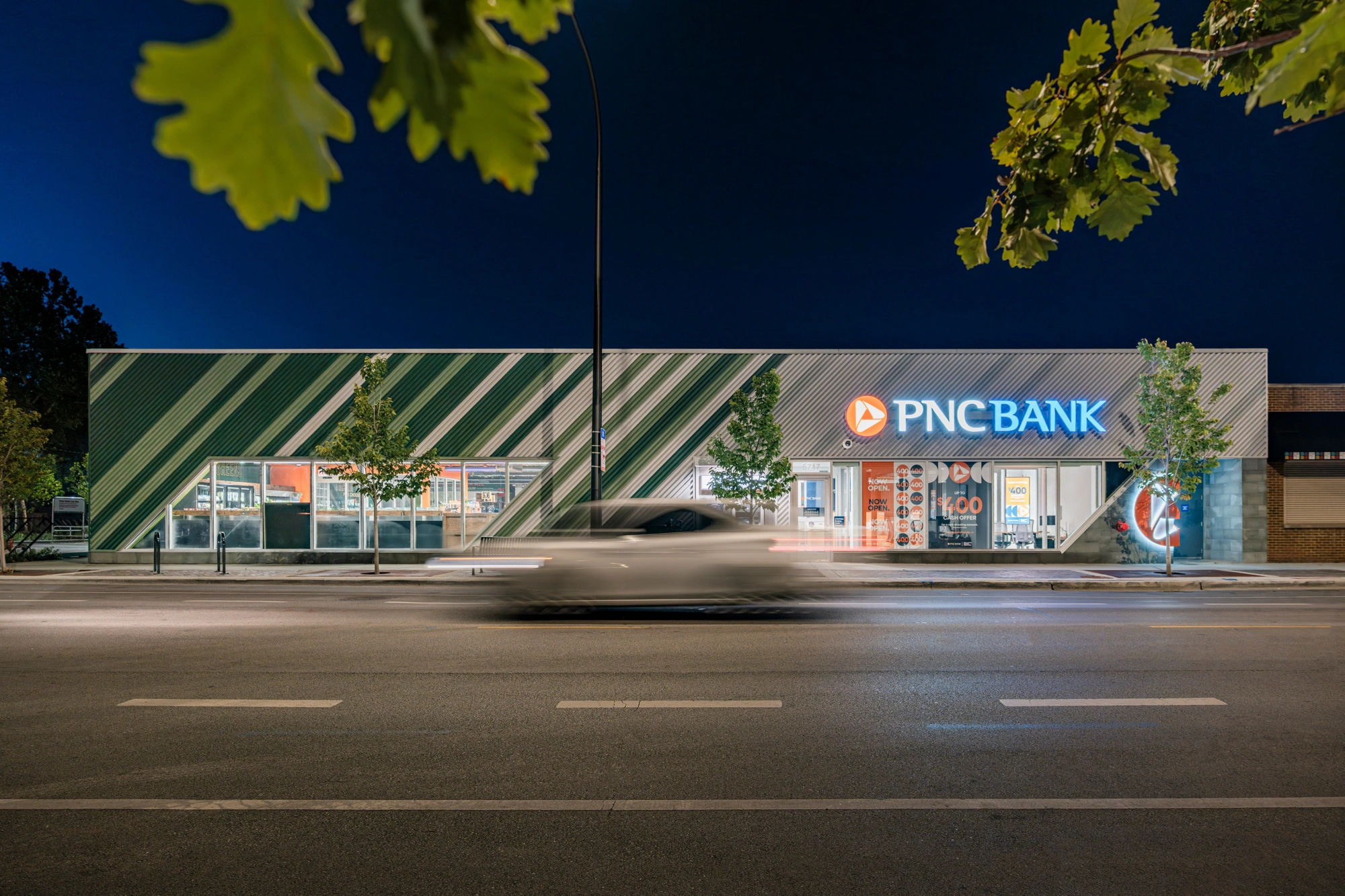
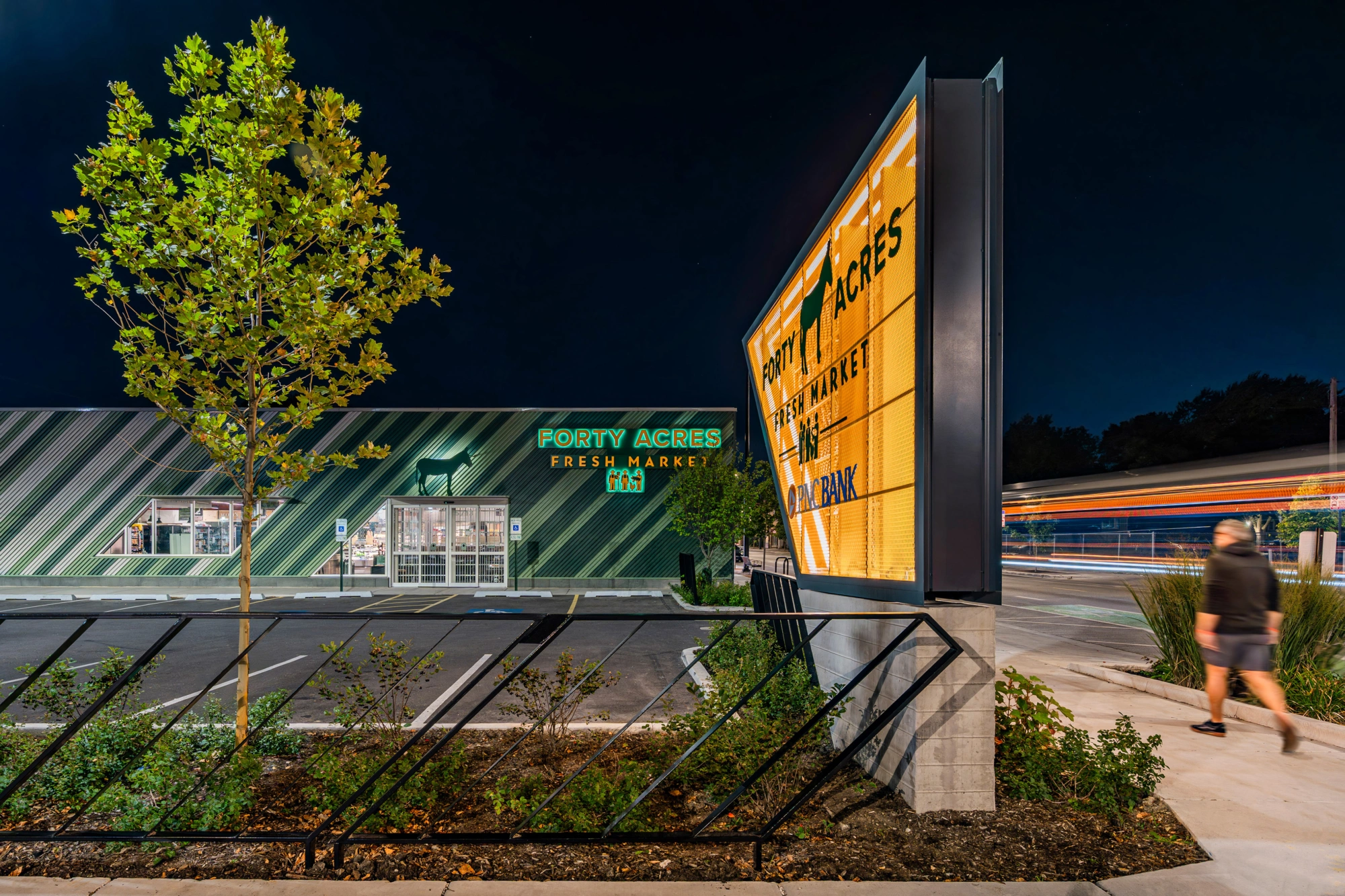
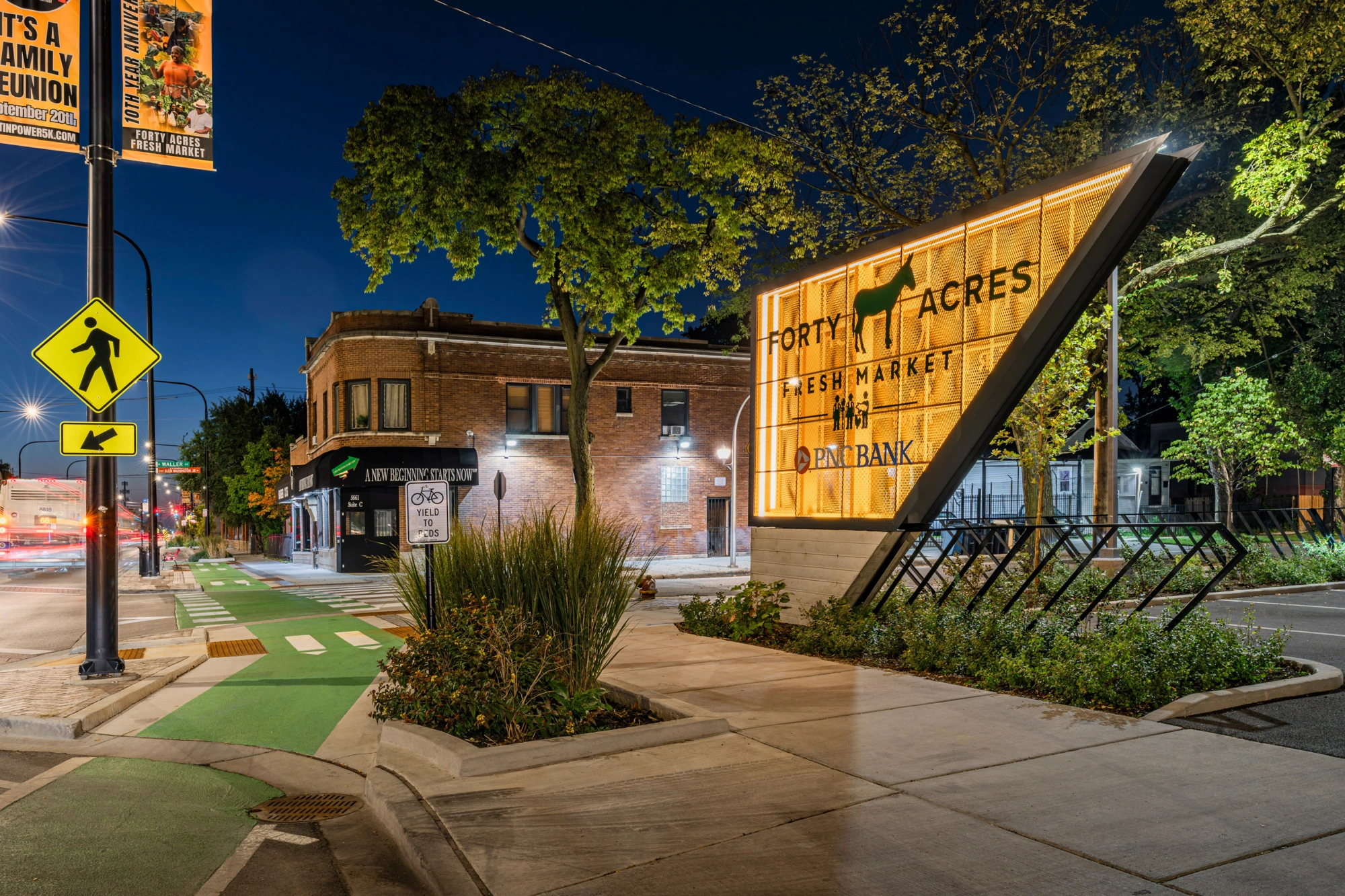
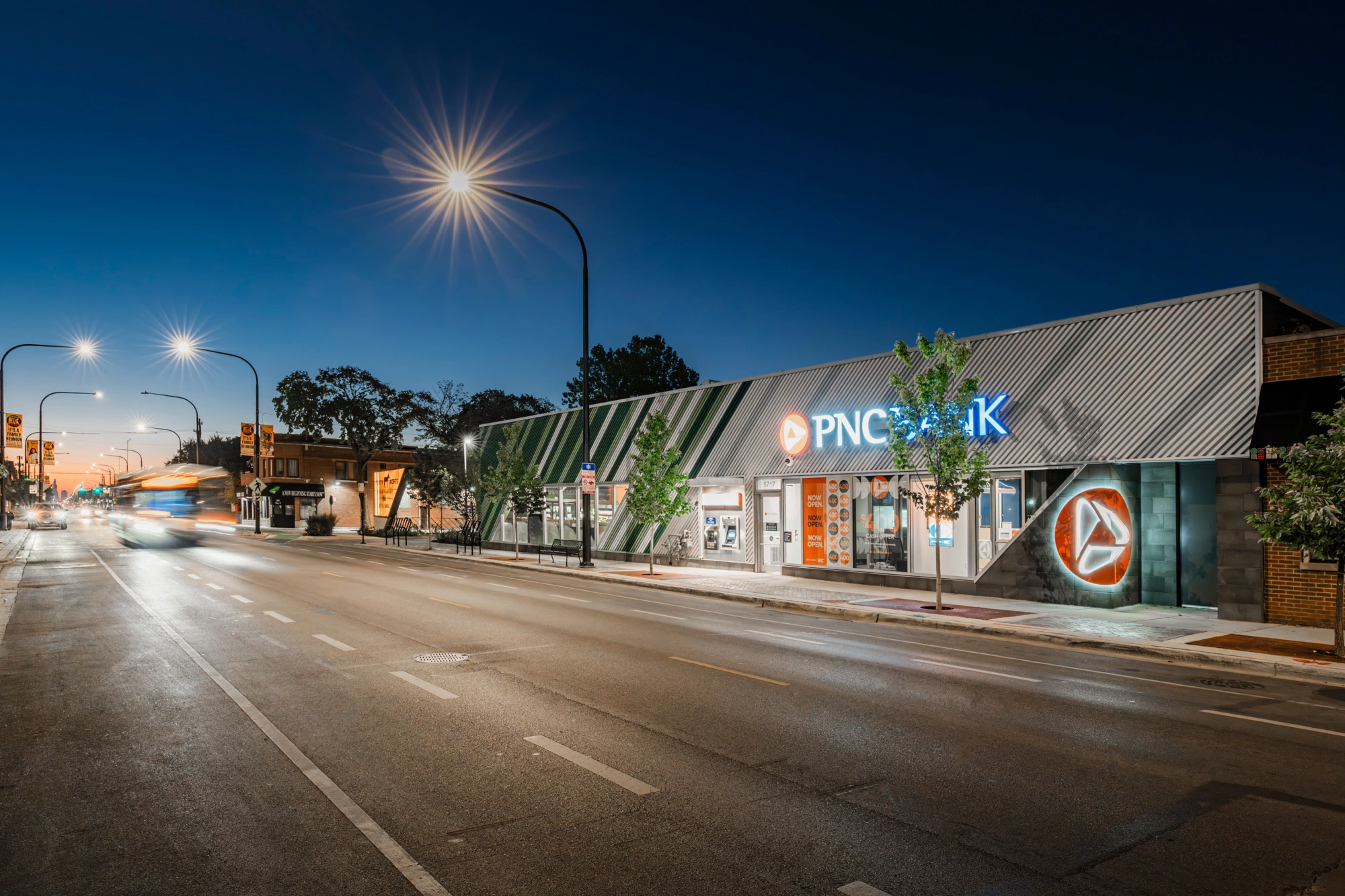
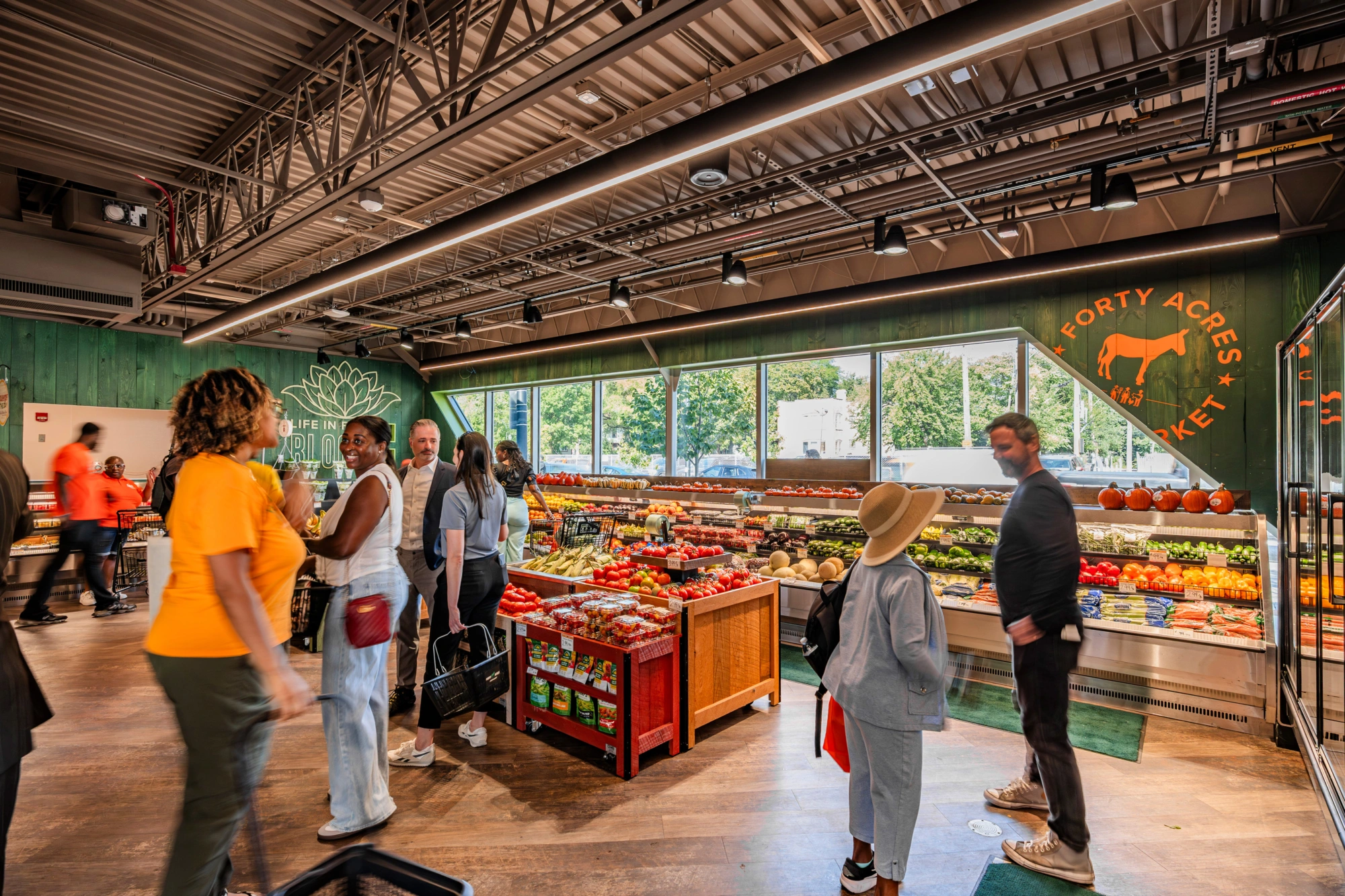
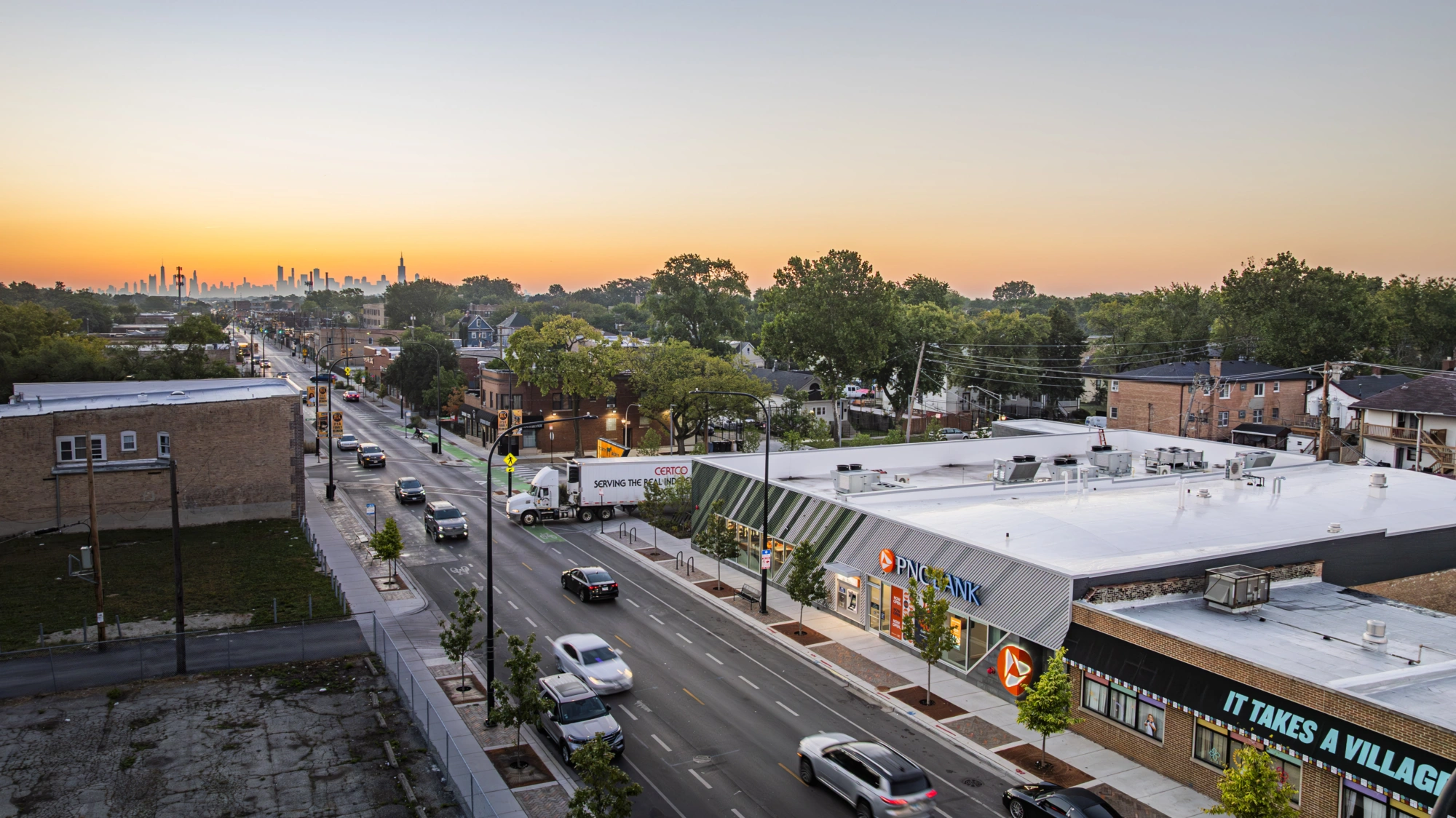
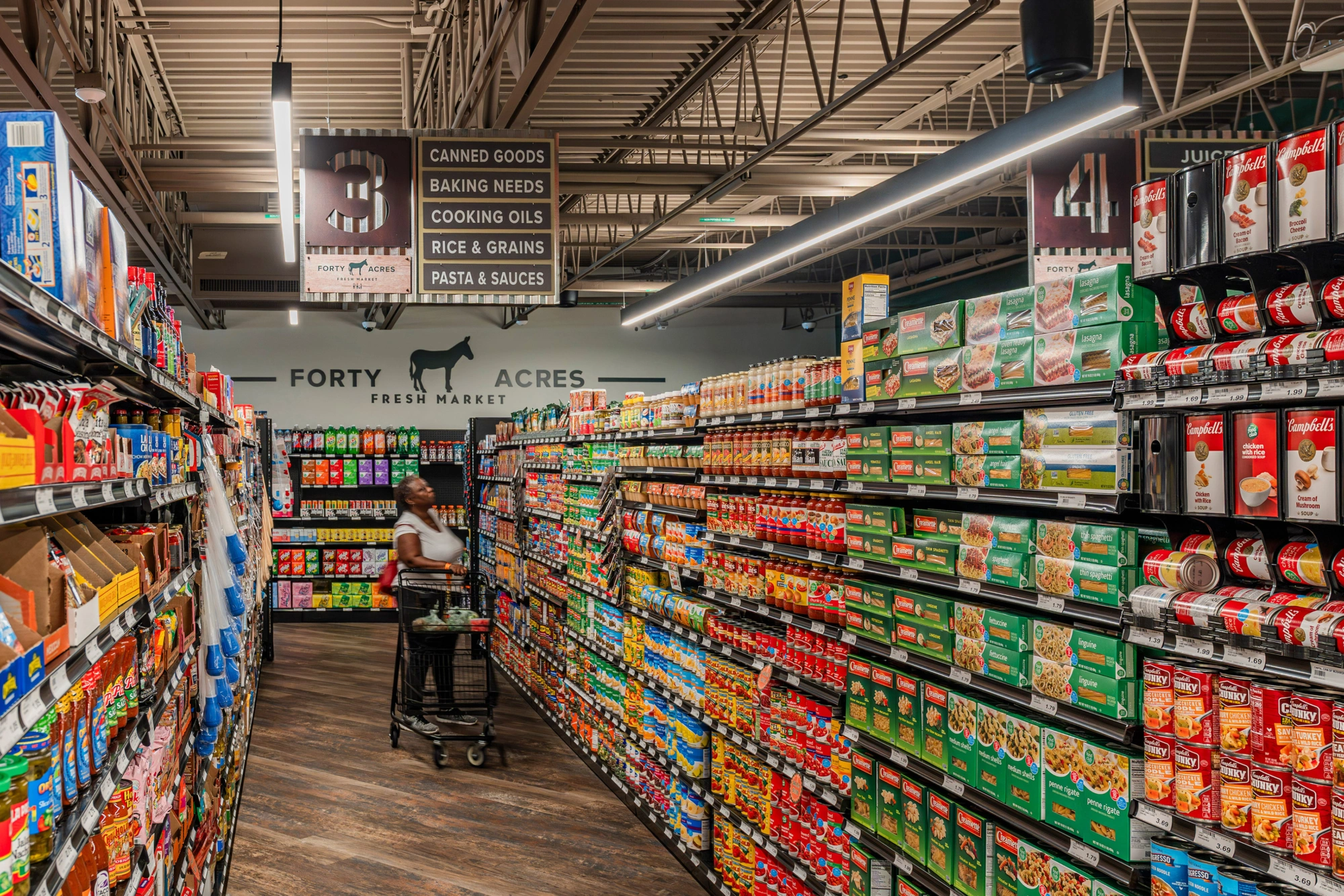
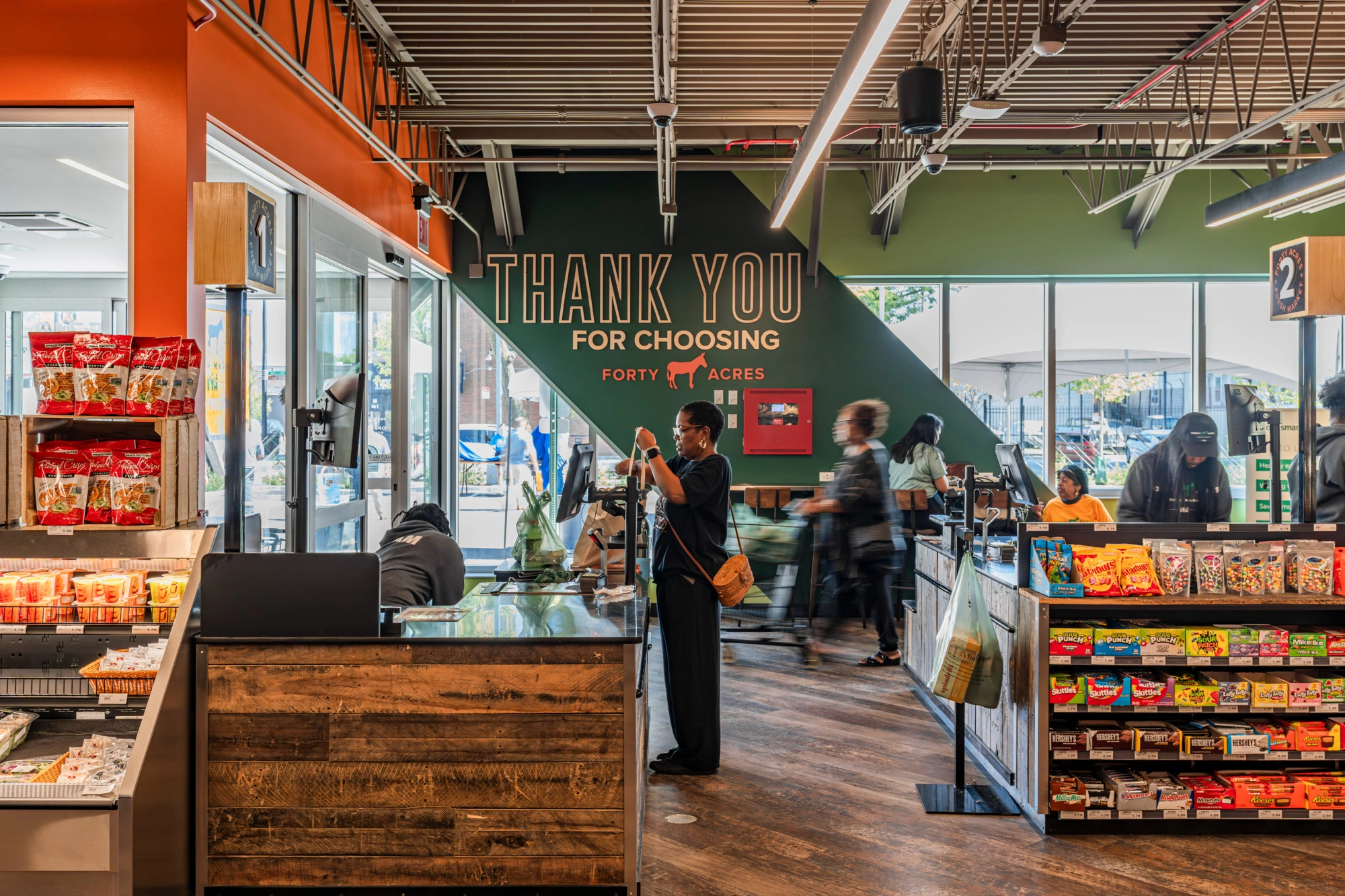
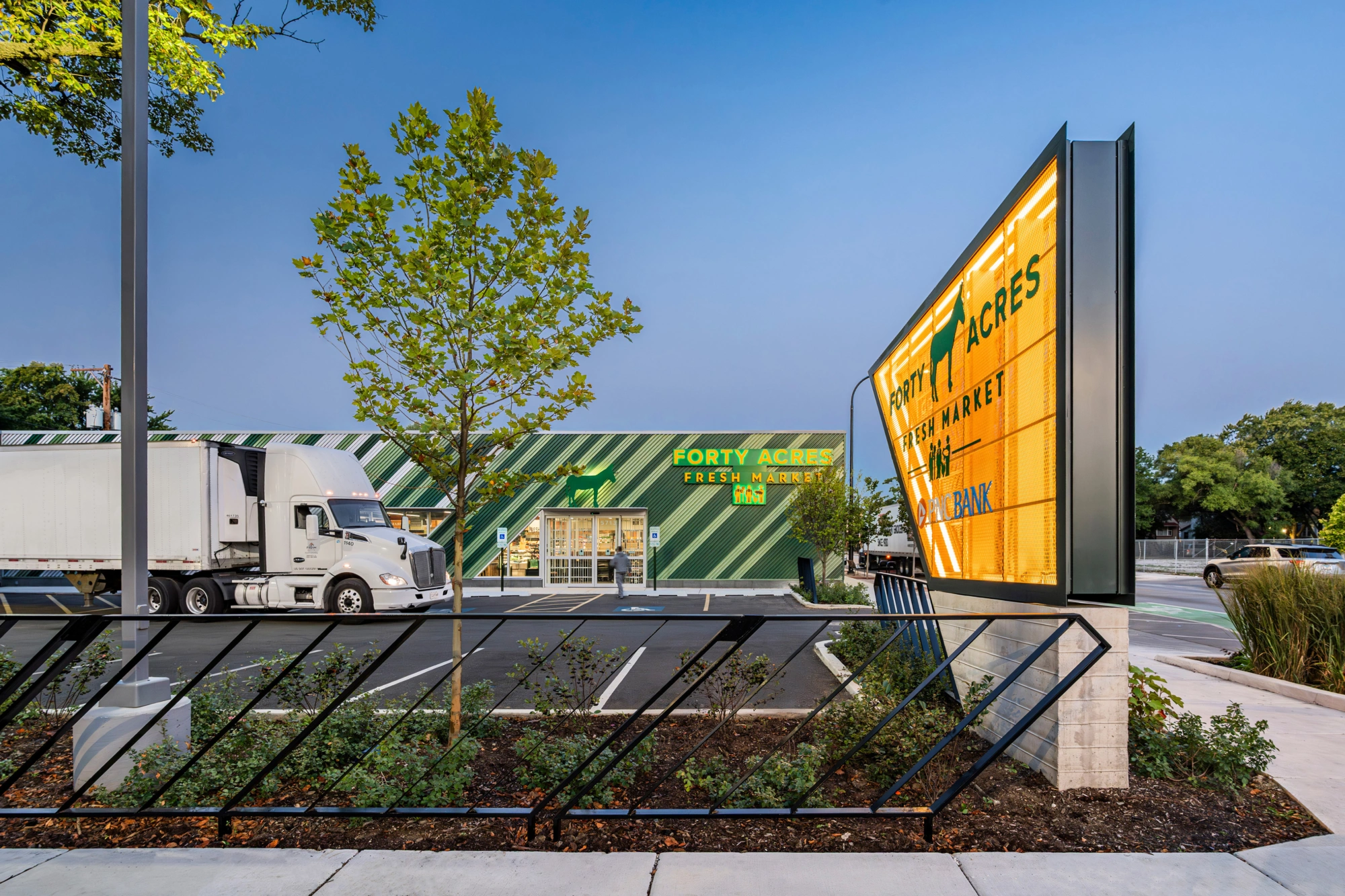
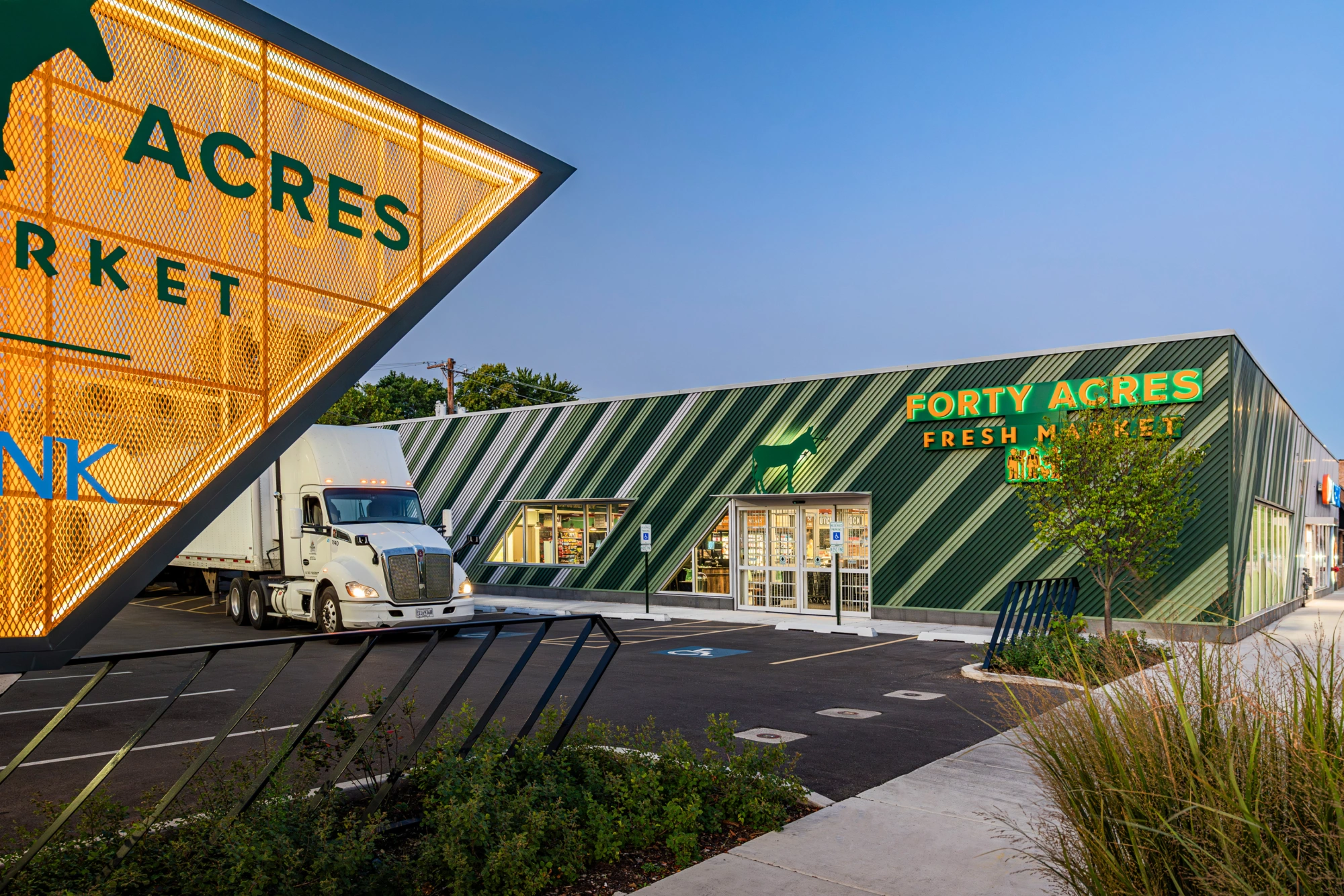
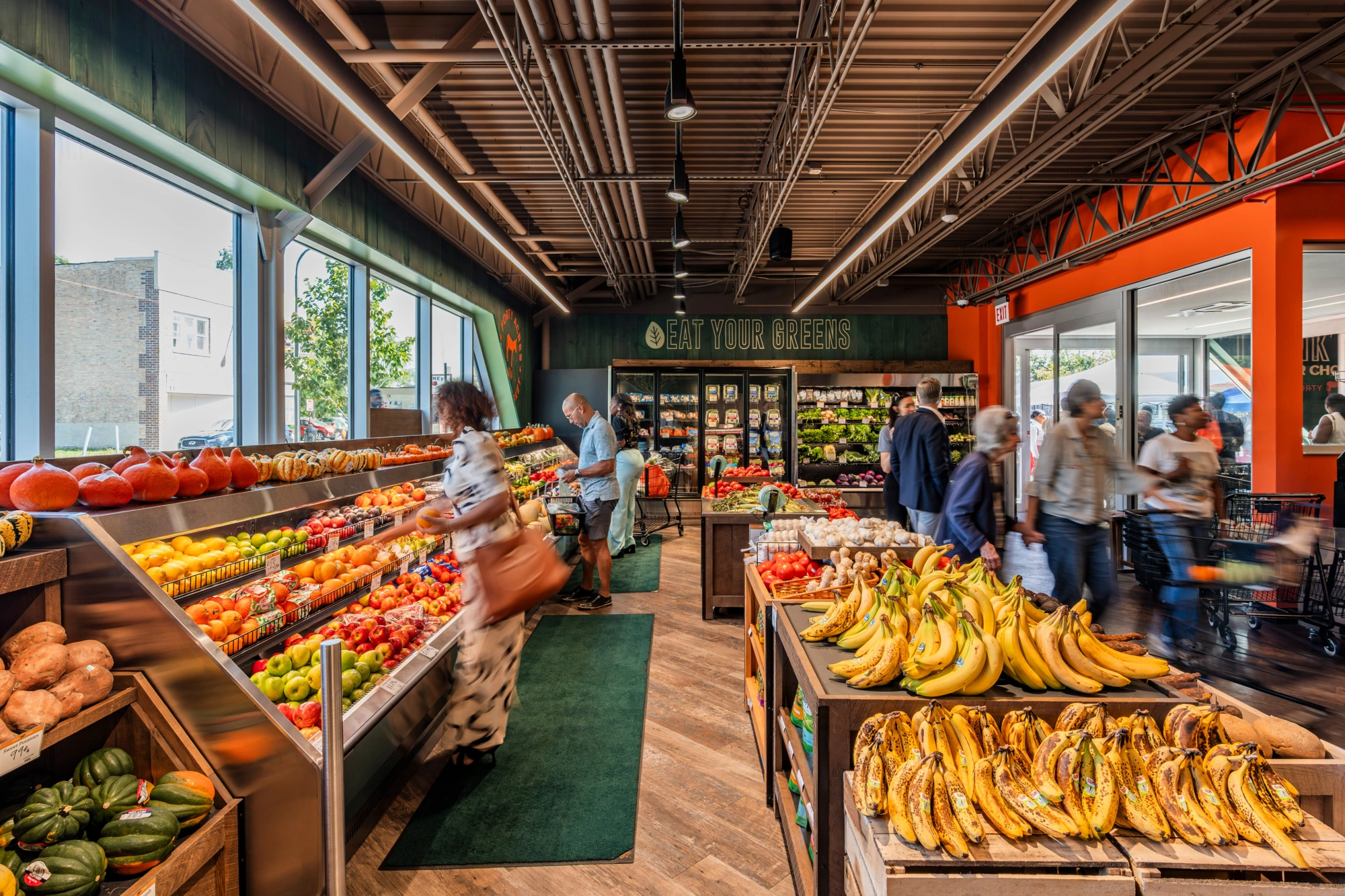
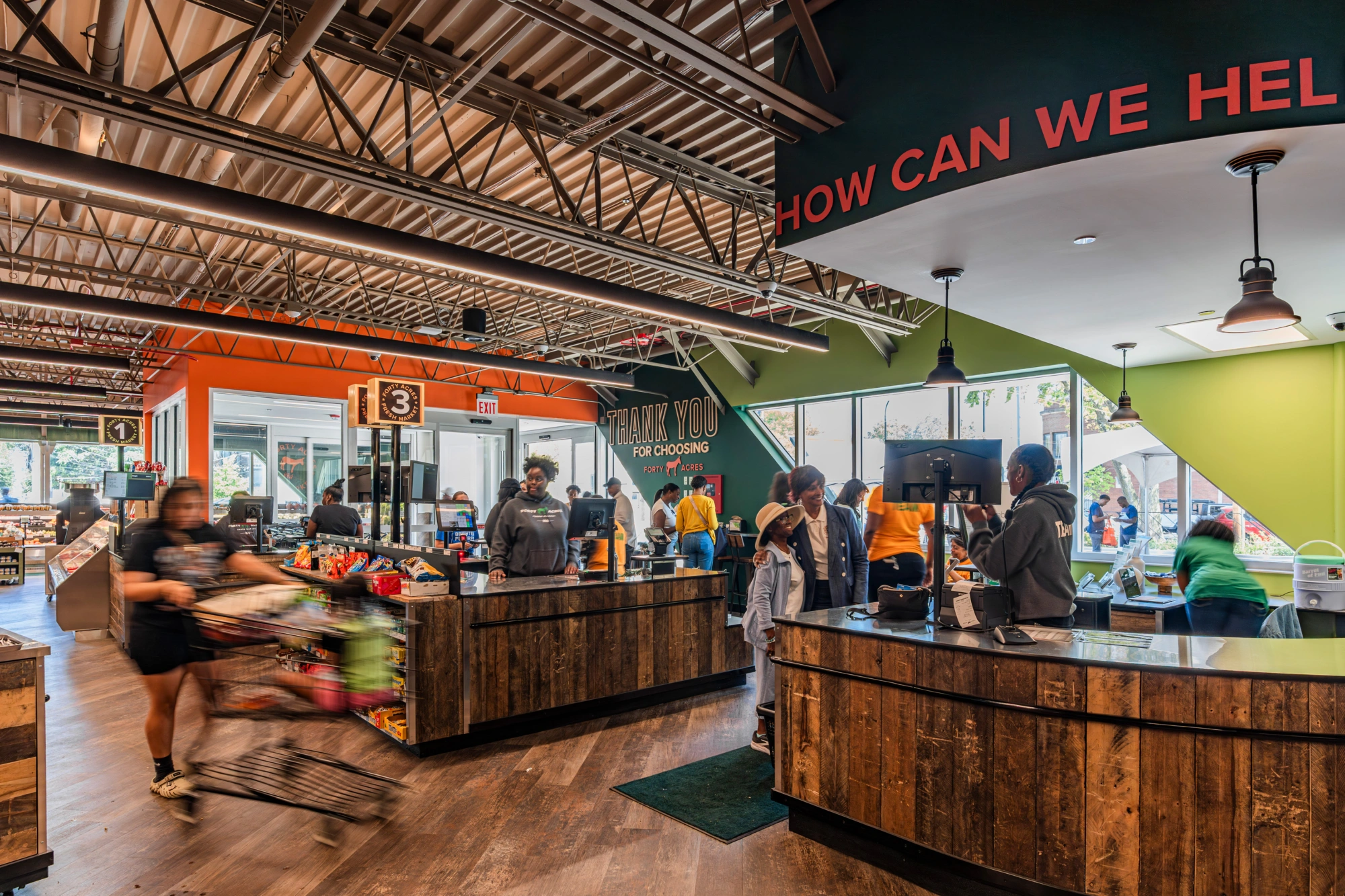
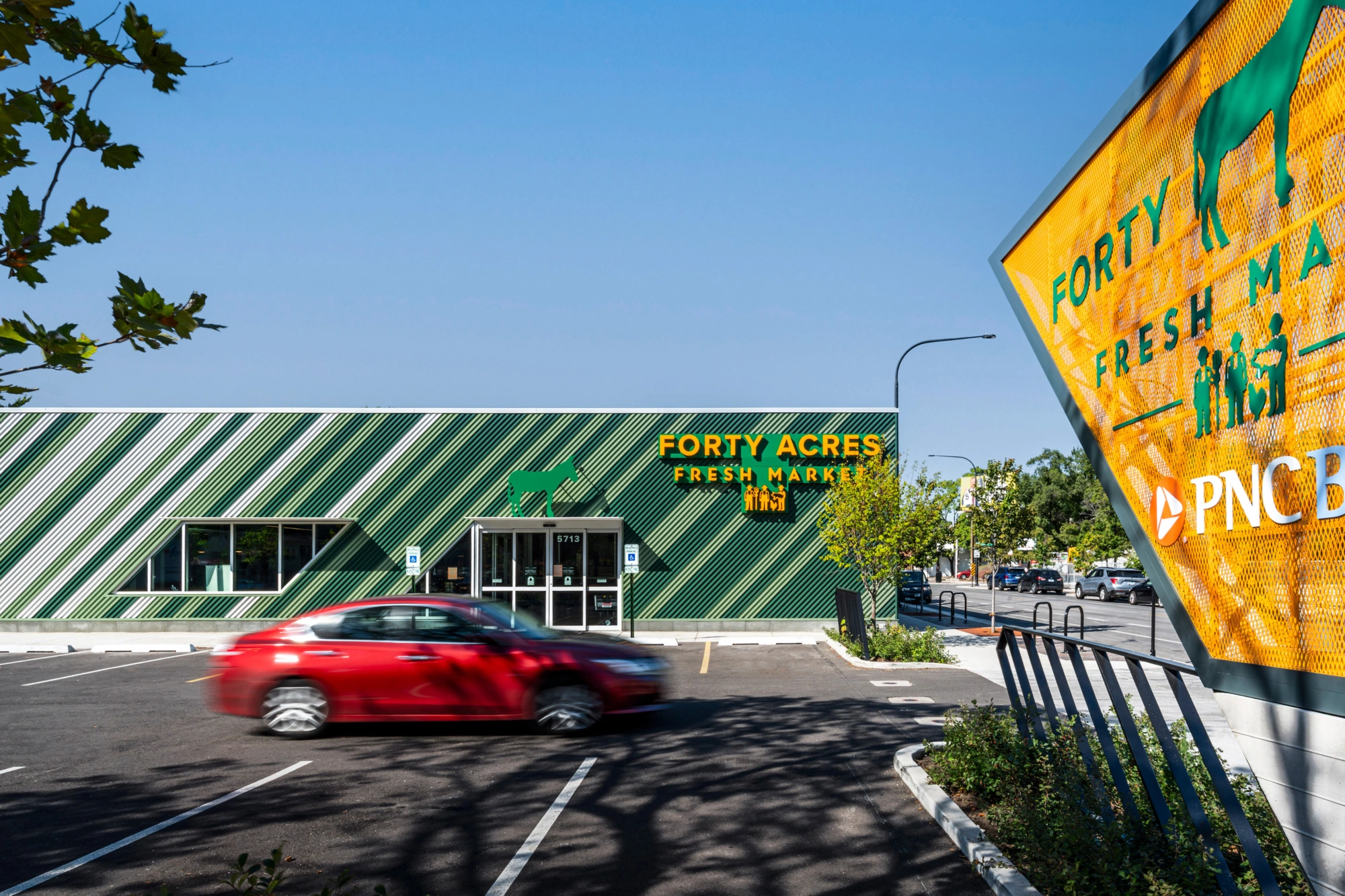
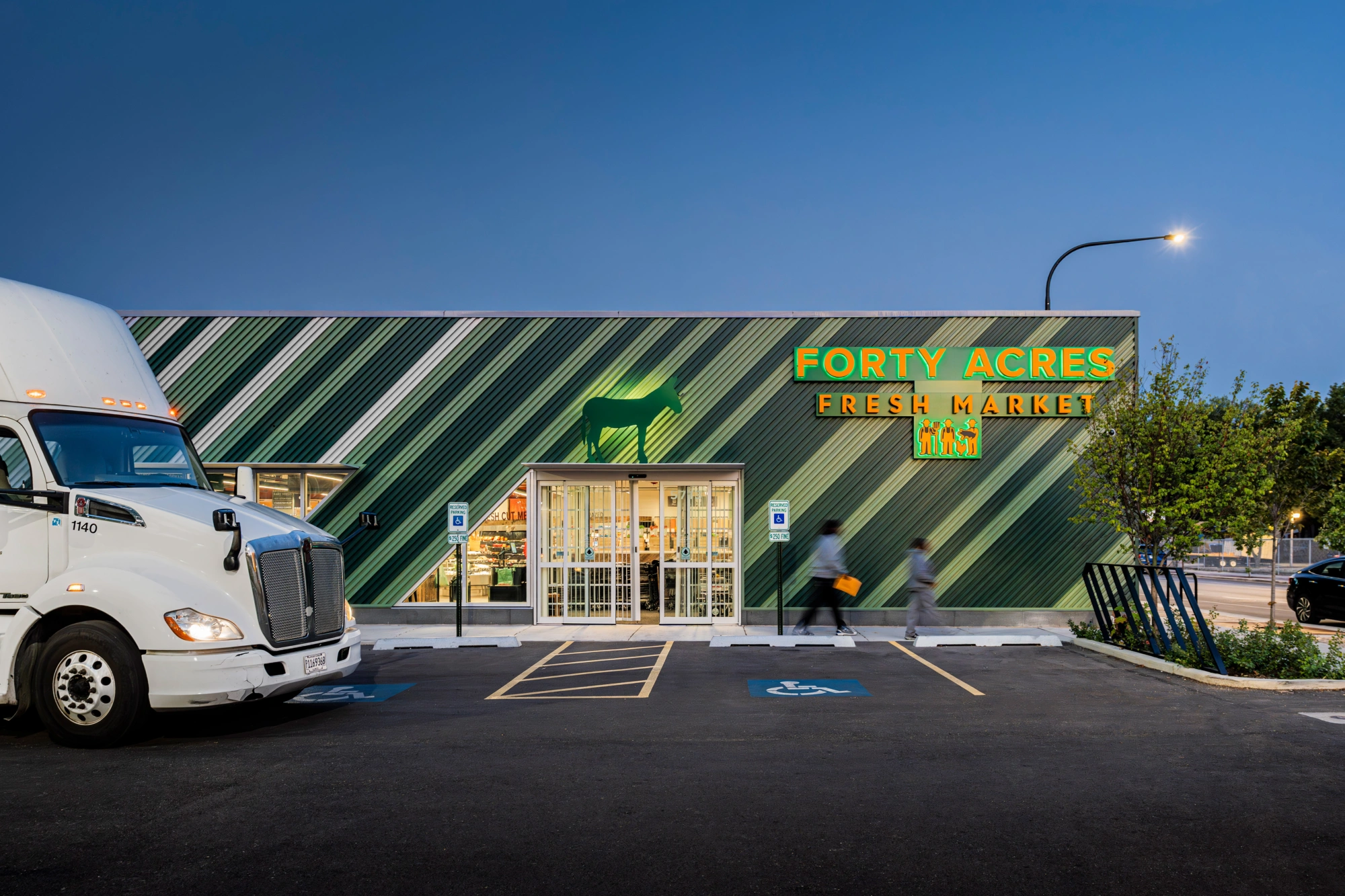
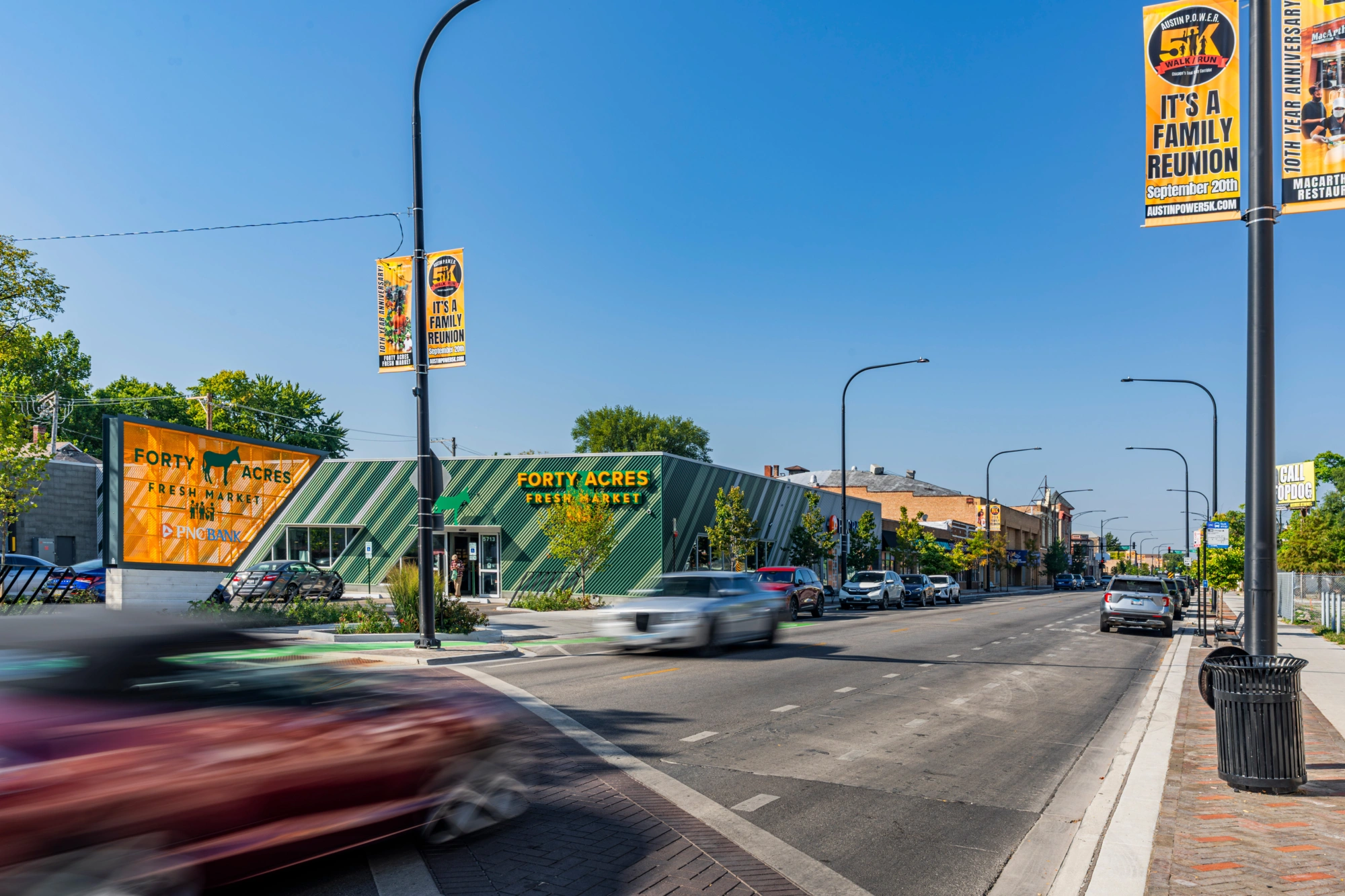
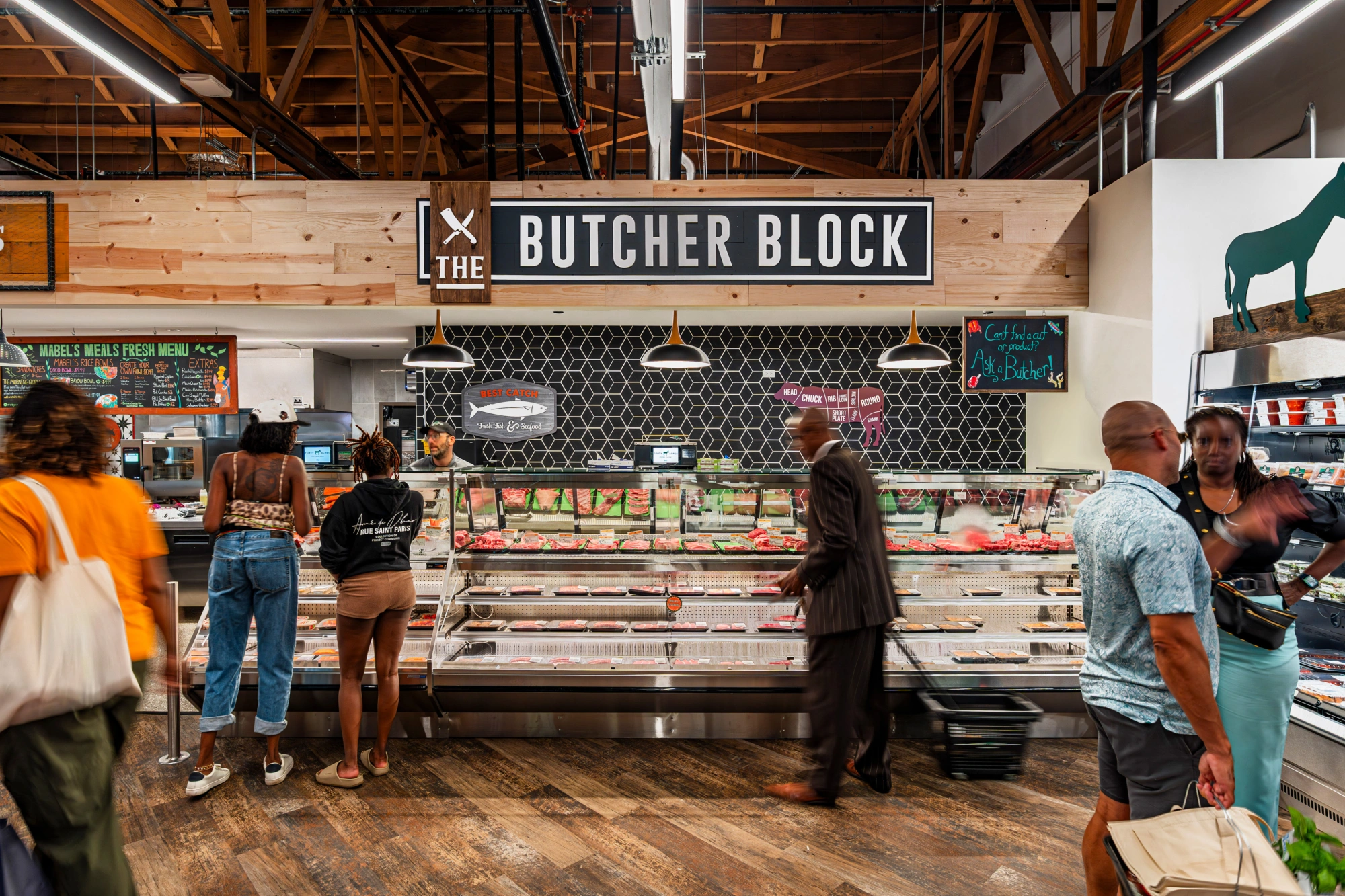
Forty Acres Fresh Market is an independent, Black-woman-owned grocery store created to expand access to fresh, high-quality food on Chicago’s West Side. This $5-million adaptive reuse and community preservation project transforms a former Salvation Army 12,000-sf bowtruss structure through functional, utility, and façade retrofits, bringing produce access deep within a 30 year food desert. A bold metallic exterior references the store’s brand colors and the angled perspective of Sherman’s promised fields of 40 acres. Once wrapped in brown painted EFIS with no windows, the façade now features angled storefronts and generous views to vibrant produce inside. Interior reconfiguration accommodated a bank co-tenant and added a loading dock for large-scale deliveries. In coordination with parallel city initiatives, the renovation aligned construction for new bike lanes, pedestrian upgrades, and streetscape improvements, extending its impact from building to block scale. The project becomes essential civic infrastructure for neighborhood wellness.
Photos ©waznyvisual unless noted ©Latent.
“From a social infrastructure standpoint, a grocery store is part of the community. That’s community cohesiveness and social cohesion that makes the neighborhood better to live in.”
Liz AbunawOwner
Former Salvation Army tied a new addition to a bowstring truss structure.
Monumental Sign + Facade Study

Integrating the Retail Tenant Facade

Typical Rainscreen

Vestibule Entrance w/ Steel Plate Canopy

Monumental Signage

Two Buildings in One | Bowstring Truss + Open Web Joist

“This isn't normal. I can't bank. I can't go to a grocery store. It's not a food desert it's food apartheid.”
- Liz Abunaw, Owner2020 Forbes Article


“It’s really time that this community has resources that are community-owned and community-focused”
Michael StrodeGarfield Park Resident
“The other part is what she’s doing is helping strengthen communities by bringing business into a historically disinvested area and for us, that addresses the root causes of hunger.”
Man-Yee LeeGreater Chicago Food Depository